
“My bowels, my bowels! I am pained at my very heart;
my heart makes a noise in me; I cannot hold my peace,
because thou hast heard, O my soul,
the sound of the trumpet, the alarm of war”
Jeremiah 4:19
W hen giving the Olivet Prophecy, Jesus did not end with a warning regarding religious deception (Mt. 24:4-5). He would go on to explain that news broadcasts would be filled with talk of war.
And ye shall hear of wars and rumors of wars: see that ye be not troubled: for all these things must come to pass, but the end is not yet. For nation shall rise against nation, and kingdom against kingdom... (Mt. 24:6-7)
The term “nation” used by Matthew when recording Jesus’ words is very interesting. It comes from the Greek word ethnos. It is where we get the terms “ethnic” and “ethnicity.” Ethnos is a term that pertains to race or nationality, not to country or realm. Here, almost 2000 years ago, Jesus was warning that in the last days, great racial strife would punctuate a significant part of society.
Today, race is at the center of almost all political discourse and the emotions run deep. In the United States, racial tensions have fractured what was once a great melting pot, and if Jesus’ words come to pass, the emotions will move from words and escalate to full-blown violence.
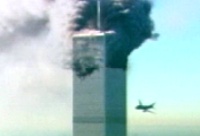
Jesus then warned that war and conflict would become commonplace around the world (“kingdom shall rise against kingdom”), and once again, He was right on target. Today, we live in a world that is truly on the brink of war. Whether it is Iraq and Iran, India and Pakistan, Israel and a host of Arab nations, or the United States and its war on terror, the prospect of armed conflict appears to be a certainty.
Throughout history, the story of man has been a story of war. Peace is as elusive as the wind. We grasp for it, but it always seems to slip through our fingers. In six thousand years of human history the number of centuries where man has enjoyed real peace could easily be counted on one hand.
“Peace, Peace,” When There is No Peace
Down through the centuries man has made many attempts to craft a sustained peace, but all have failed. Treaties and alliances have been forged only to be broken. Even great institutions like the League of Nations and the United Nations have been assembled with the express purpose of building a bridge to peace in the world. The words that originally introduced the U.N. Charter express such a hope and at the same time a dreadful fear.
“...to save succeeding generations from the scourge of war, which twice in our lifetime has brought untold sorrow to mankind.”
Today, the purpose of the UN is expressed in four broad goals.
- To maintain international peace and security, and to that end: to take effective collective measures for the prevention and removal of threats to the peace, and for the suppression of acts of aggression or other breaches of the peace, and to bring about by peaceful means, and in conformity with the principles of justice and international law, adjustment or settlement of international disputes or situations which might lead to a breach of the peace;
- To develop friendly relations among nations based on respect for the principle of equal rights and self-determination of peoples, and to take other appropriate measures to strengthen universal peace;
- To achieve international co-operation in solving international problems of an economic, social, cultural, or humanitarian character, and in promoting and encouraging respect for human rights and for fundamental freedoms for all without distinction as to race, sex, language, or religion; and
- To be a centre for harmonizing the actions of nations in the attainment of these common ends.
Despite its noble aspirations, who really believes the world is safer now than it was when the U.N. charter was first ratified in 1945? Despite its cries for peace, war is everywhere. In truth, the United Nations has become little more than a forum for nations to bicker and point accusing fingers at each other. The prospects of war and conflict truly are everywhere—and there’s the rub. Today we live in a world where the escalation of armed conflict between nations is not an option. This is because its destructive power is so vast that the entire could be forced to pay for the actions of a very few.
An Appeal for Peace
When addressing the United Nations over forty years ago, President John F. Kennedy warned that “mankind must put an end to war – or war will put an end to mankind.” He went on to say, “Together we shall save our planet or together we shall perish in its flames.” Tragically war and conflict are still everywhere--and today, mankind is like a little child playing with a loaded gun. It’s only a matter of time until tragedy strikes.
Mutually Assured Destruction
During the “cold war,” the concept of “mutually assured destruction (MAD)” was advanced as a viable formula for insuring that the world’s super powers would never engage in nuclear war. The thinking was that because the cost of such action to their respective nations was so high, countries such as the United States, the USSR, Britain, and China would “stand down” before launching a nuclear strike. But how effective is that concept if nuclear weapons fell into the hands of terrorists organizations such as the al-Quida, Hamas, or Hizballah? These fanatical groups also have goals: to kill and to die.
The Road to Peace
The great tragedy throughout human history is that man does not understand the root cause of war. However, the Bible does understand, and reveals that cause. Notice the words of the apostle James in his epistle to the twelve tribes of Israel that were scattered abroad.
From whence come wars and fighting among you? Come they not hence, even of your lusts that war in your members? You lust, and have not: you kill and desire to have, and cannot obtain: you fight and war, yet you have not, because you ask not. You ask, and receive not, because you ask amiss, that you may consume it upon your lusts. (James 4:1-3)
The only way mankind will ever achieve a lasting peace is to change the way it thinks--and to do so it must make the most radical of transformations. No longer can humanity be driven by self will, but rather by an uncompromising selflessness and a genuine outgoing concern for others. Jesus Christ possessed such a mind and heart. His love for mankind was so great that He divested himself of the infinite power and glory He had known before coming to earth as a man (Jn. 17:1-5) and took upon himself the form of a servant. He then suffered the indignity of a torturous death (Phil. 2:5-8). Jesus did this so that man would be spared the eternal consequences of sin and instead be reconciled back to the Father (Rom. 5:10).
Without true humility, as well as compassion for others, mankind has sealed its fate in a tragic future. This is a profound truth that some of the worlds great leaders have pondered. The late American general Douglas MacArthur summed up the challenge facing mankind living in a nuclear age this way.
“It must be of the spirit if mankind is truly going to save the flesh.”
Tragically, these words are as far from man as the east is from the west. Once again war is everywhere. It stalks the earth in the form of great acts of violence perpetrated by world leaders on their own people as well as on their neighboring nations. But it also thrives in small towns and villages.
Within the great nations on earth, terrible acts of violence have become a part of their cultures. Consider the terms that fill newspapers every day: gang violence, domestic violence, spousal abuse, child abuse, and elder abuse, just to name a few.
The United States is technologically the most advanced nation in history, yet its streets are filled with violence. Whether it’s inner city gangs resorting to murder in defense of “their territory,” or small, rural high schools being ripped apart by students acting out some fantasy requiring the deaths of other students and faculty, the land of the free has become a nation of blood. And why should anyone be surprised? Violence is actually promoted in America. Our music and movies pay tribute to murder. Sporting events are punctuated by bench-clearing brawls and riots. Even celebrating has taken the form of violence. When athletic championships are won, city officials must implore their citizens not to destroy the very place they live and work. But that is not the end of it.
In the United States, simulated killing has become a part of its recreation. One of the most popular video games in America requires players to steal cars, fornicate with a prostitute, then kill the prostitute in order to retrieve the money paid for her “services.” One mother who purchased this game stated, “I don’t think it’s wrong because that is not where my child learns morals.” When her 13-year-old son was interviewed regarding the game his mother had purchased for him, he said, “I think it’s cool. It’s the closest thing to killing someone without really doing it.”
Meanwhile as America teaches its young to treat murder as a game, Arab nations around the world teach their children to aspire to become “suicide bombers.” They actually sing songs in primary schools that proclaim the nobility of strapping on explosives and going out to kill the “apes and pigs” (Jews).
President Ronald Reagan once said, “The world is a dangerous place.” His words are tragic but true. God’s word describes the last days as similar to those in the time of Noah. The book of Genesis describes that period as a time when “the earth was filled with violence” (Gen. 6:11). Can you think of a better description of our world today?
Directory | Chapter VII
|